기치
블로그

Bag Factory Sampling Process: A Complete Guide for B2B Buyers

블로그

Bag Factory Sampling Process: A Complete Guide for B2B Buyers

June 09, 2026

For brands and wholesalers planning to customize bag products, understanding the professional bag factory sampling process is the key to ensuring bulk production quality and shortening development cycles. This article breaks down every step from design drawings to confirmed samples, helping you efficiently advance your OEM/ODM bag customization projects.


I. Pre-Sampling Requirements Communication & Documentation

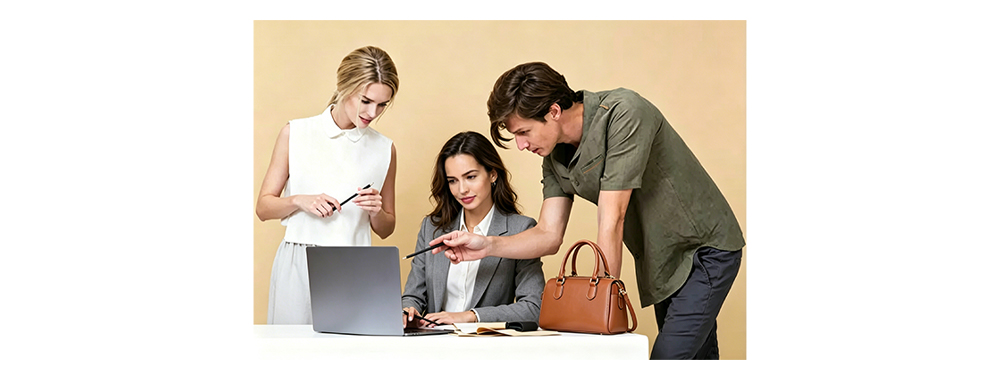
Before sampling officially begins, clear requirements communication is the foundation for avoiding repeated revisions and controlling development costs. As a professional bag manufacturer, we recommend clients prepare the following materials before sampling:

Documentation Type

Specific Content

Remarks

Physical Sample

Having a physical sample as reference is ideal; it provides the clearest quality benchmark for the factory.

If no physical sample is available, please refer to the process description below.

Design Drawings

1) Bag dimensions, structure, and functional design;

2) Fabric material details (e.g., 840D nylon, canvas, genuine leather, or vegan leather), color, and thickness;

3) Accessory requirements: zipper brand (e.g., YKK, SBS), buckle type (e.g., FIDLOCK buckle, ITW Nexus), hardware color;

4) Craft details: print/embroidered logo placement, stitching technique (e.g., standard stitching, or unconventional processes like HOT SEAL).

1) PDF/AI files preferred; experienced factories can also proceed from hand sketches or concept drawings.

2) Provide physical color swatches or Pantone codes.

3) Premium accessories like YKK zippers or FIDLOCK buckles often require significantly longer lead times.

4) Consider load-bearing requirements.

Quantity & Purpose

Sample quantity, estimated final order volume, target market.

Influences sampling strategy and quotation approach.

Product Positioning

For niche or startup brands, providing product grade positioning and target audience positioning is recommended.

This ensures both parties share a consistent understanding of product requirements from the outset.

Testing or Compliance Requirements

If testing or compliance requirements exist, they must be clearly stated at the initial development stage.

So that sample materials and process design can meet requirements.

 Pre-Sampling Requirements Communication & Documentation

II. Six Core Stages of the Sampling Process

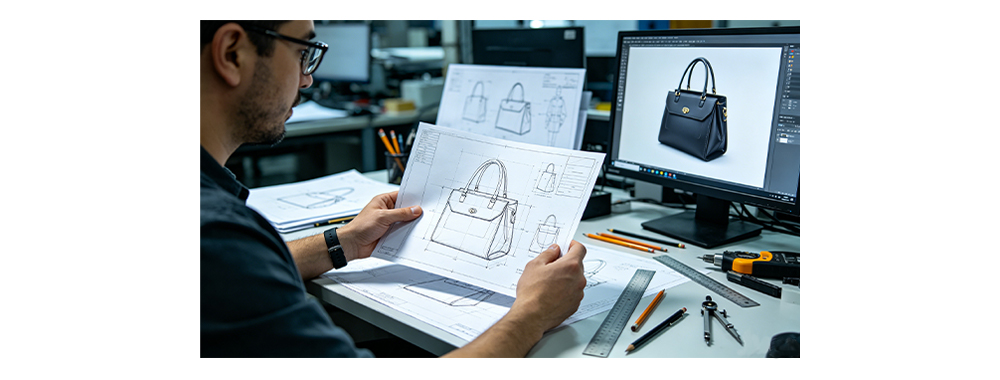
Stage 1: Drawing Review & Process Evaluation (1–3 Business Days)

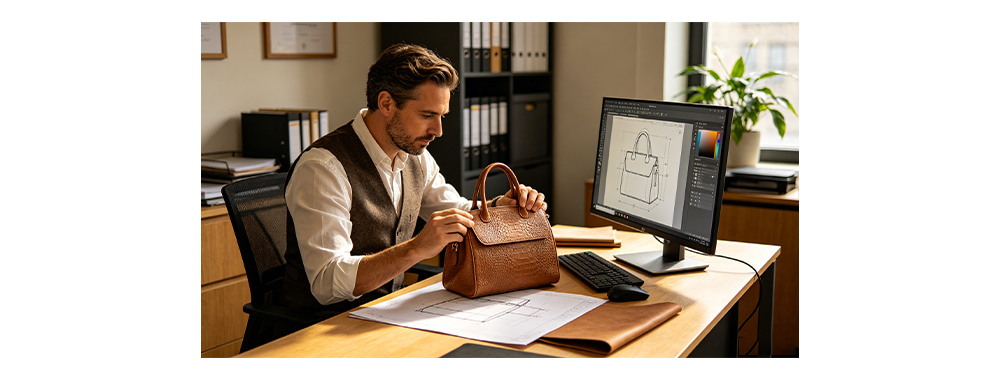
Upon receiving design materials, the factory technical team conducts a Design for Manufacturing (DFM) feasibility assessment. Key review areas include:

    • Whether material requirements are clear and specific. Often, clients request "Saffiano Leather," but this term only describes the surface texture (crosshatch pattern) and does not indicate actual material standards. Leather grades vary widely, with prices potentially ranging from $2/yd to $10/yd or higher.
    • Whether manufacturing processes align with factory capabilities.
    • Whether any special processes require mold development.
    • Whether design detail requirements can be scaled for mass production.

This stage may generate process modification recommendations for client confirmation.

Drawing Review & Process Evaluation


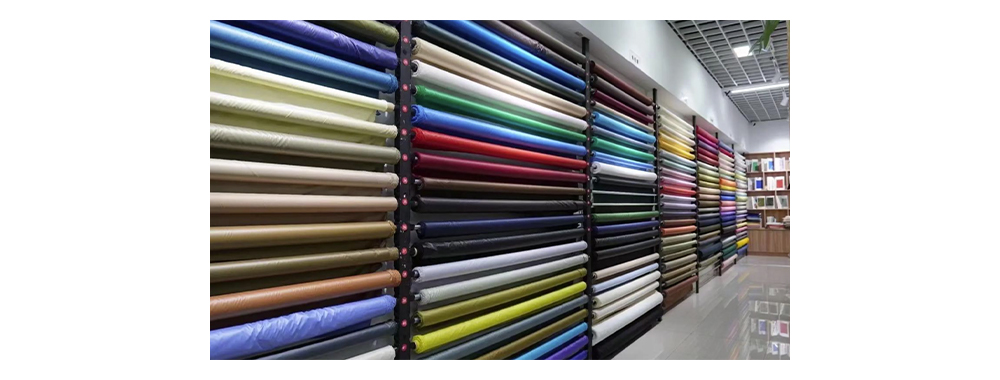
Stage 2: Material Preparation & Procurement (3–7 Business Days)

Based on the sample or design drawings, the factory procures materials, including:

    • Outer fabric, lining, and special materials such as RPET or organic cotton. These materials are not as widely available as conventional options, so buyers are advised to request factory color swatches during the initial communication phase (Stage I).
    • Zippers, webbing, buckles, and hardware accessories. If branded zippers or buckles like Lambo/Fidlock are used, material procurement cycles will be longer.
    • Logo production or mold development according to process requirements.

Material Preparation & Procurement


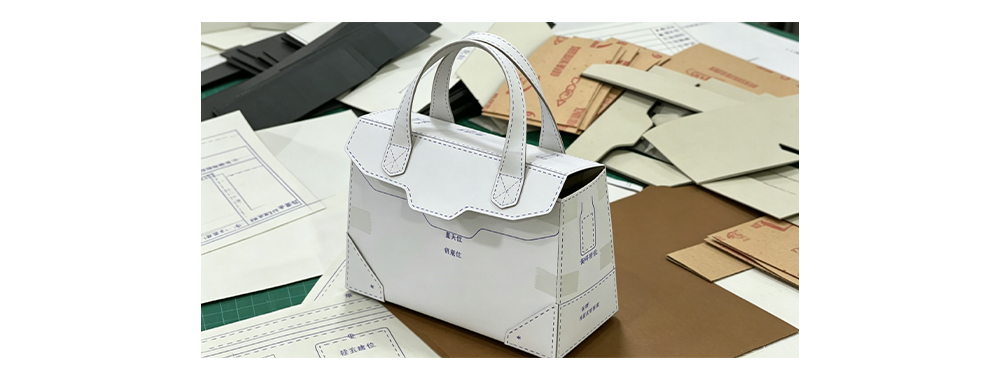
Stage 3: Pattern Making & Prototype Construction (3–7 Business Days)

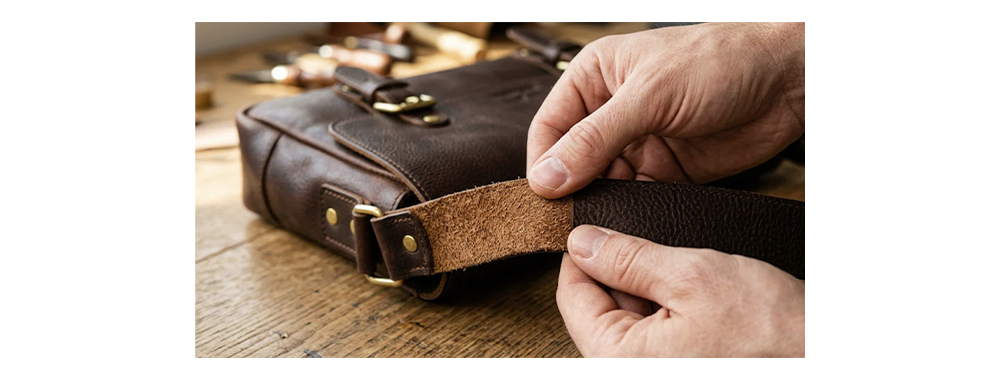
    • Based on the physical sample or design drawings, the sampling room master first creates a PAPER PATTERN. Experienced pattern makers can often construct a 3D product mockup from the paper pattern alone. The quality of the product silhouette depends heavily on this paper pattern.
    • Using the finalized paper pattern, fabric is cut at 1:1 scale.
    • Logo production according to process requirements (e.g., silk screen, heat press, or embroidery).
    • Assembly of inner pockets, zippers, buckles, straps, and other accessories.
    • Completion of overall stitching.

Pattern Making & Prototype Construction


Stage 4: Internal Sample Review & Corrections (1–2 Business Days)

After the initial sample is completed, a professional bag manufacturer does not immediately ship it to the client. Instead, an internal three-step review is conducted:

    • Sample maker self-inspection: Appearance and dimensional checks.
    • Joint review by product engineers and pattern makers: When a new product is developed, professional factories conduct product evaluation at this stage to assess potential process difficulties and structural rationality, ensuring mass production feasibility while guaranteeing that future bulk product quality will match the sample.
    • Internal product testing: Professional bag manufacturers perform much work that clients may not be aware of. For example, after sample completion, the factory conducts basic physical tests such as load-bearing tests (particularly for straps and handle stress points), zipper smoothness, and open-close cycle tests.

Internal Sample Review & Corrections

Stage 5: Client Confirmation & Feedback Collection

After receiving the sample, clients are advised to verify the following dimensions:

Verification Item

Inspection Points

Common Issues

Appearance & Dimensions

Consistency with drawings, proportional harmony.

For elastic fabrics such as quilted cotton materials, the high stretchability of finished fabric can lead to discrepancies in how both parties interpret specifications.

Material Texture

Leather hand feel and thickness against expectations; hardware thickness, weight, and texture against expectations.

Color differences may occur when confirming colors via email-sent images due to screen color variations.

Function Testing

Zipper smoothness, carrying comfort, etc.

Discrepancies between client-expected zipper smoothness and actual sample performance.

Craft Details

Stitch density, logo process refinement.

Potential differences between initial handmade samples and mass production batches.

 Client Confirmation & Feedback Collection

Stage 6: Pre-Production Sample (PP Sample) Confirmation (for Bulk Orders)

Once the client confirms the initial sample and places a formal order, the factory will produce a pre-production sample using bulk materials and molds:

    • Validating mass production process stability.
    • Confirming consistency between bulk colors and sample colors.
    • Serving as the standard reference for bulk production and final inspection.

Pre-Production Sample (PP Sample) Confirmation


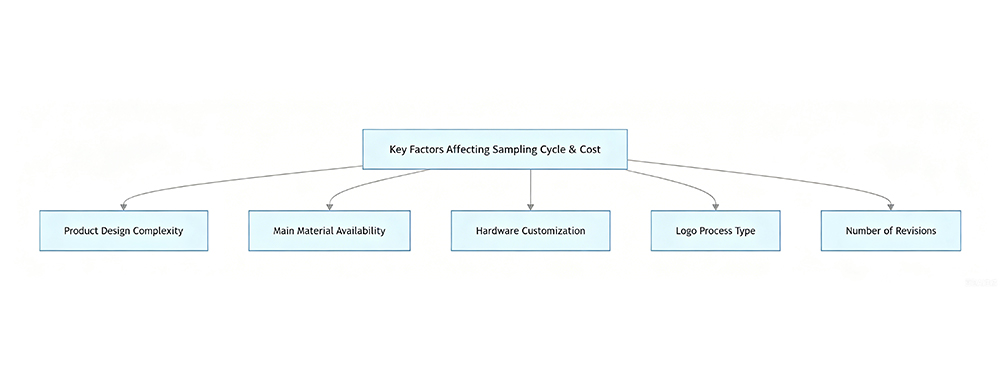
III. Key Factors Affecting Sampling Cycle & Cost

Factor

Impact on Cycle

Impact on Cost

Product Design Complexity

Unconventional structures and special opening designs — such as the fully open-top cosmetic bags and backpacks that have been popular in recent years, which require mold-formed wire-frame supports inside the bag top — increase sampling cycles.

Higher process difficulty requires more labor hours, resulting in increased sample fees.

Main Material Availability

Imported or specially customized fabrics take longer than conventional stock fabrics.

Imported/custom fabrics incur additional costs; conventional stock materials involve limited expenses.

Hardware Customization

When hardware buckles or zipper pulls with client logos require mold development, the mold cycle is generally 10–15 days.

Mold fees are listed separately or incorporated into sample fees.

Logo Process Type

Embroidery requires pattern development, silk screen requires mesh preparation, and hot stamping requires plate making — generally 3–5 days production time.

Embroidery pattern fees, silk screen mesh fees, and heat press mold fees are incurred.

Number of Revisions

Each round of revision adds 3–5 days.

Major revisions may generate secondary sample fees.

 Key Factors Affecting Sampling Cycle & Cost

IV. How B2B Buyers Can Collaborate Efficiently with Bag Factories on Sampling

1.Provide complete documentation at once: Avoid fragmented information transfer that may lead to confusion or misinterpretation.


2. Define clear priorities: Clearly indicate which points are mandatory requirements and which areas the factory can self-correct or optimize during sampling. Clear boundaries enable both product quality and cost to reach optimal levels.


3. Maintain revision records: Document each round of modifications via email or documentation to prevent version confusion.


4. Conduct photo or video call sample verification: Before shipping the sample, preliminary confirmation can be made through clear multi-angle photos and videos to ensure no major errors exist before dispatch — saving time and reducing unnecessary expenses.


5. Confirm bulk standards in advance: During sample confirmation, clearly define acceptance standards (required AQL level). For components with special requirements — such as rainbow-film zippers requiring >1,000 open-close cycles without color fading — establish standards before bulk production to reduce subsequent disputes.

How B2B Buyers Can Collaborate Efficiently with Bag Factories on Sampling


V. FAQ: Common Questions About Bag Customization

Q1: Can we proceed with sampling if we have no design drawings but have a physical sample or just an idea?

Absolutely. Providing a physical sample to the factory is ideal. The factory can perform reverse engineering based on the physical sample, disassembling and analyzing the structure to replicate and reproduce it — this is the most commonly adopted model by major brands when conducting OEM bag production.

For some startup brands or small buyers who may only have concepts and preliminary ideas without physical samples or standardized design drawings, ODM services are available. The factory provides proposals for the client to evaluate and select.


Q2: Is the sampling fee refundable?

Most factories adopt an "order offset" model — when the bulk order reaches the agreed quantity (e.g., 5,000+ pieces), the sampling fee is fully deducted from the order payment.


Q3: How many color samples can be produced for one style?

For the first sample, it is recommended to produce one primary color first. After sample confirmation, additional colorways can be added. This approach enables more efficient sample receipt and reduces unnecessary costs from re-sampling all colorways simultaneously.


Q4: Will there be differences between the sample and final bulk production?

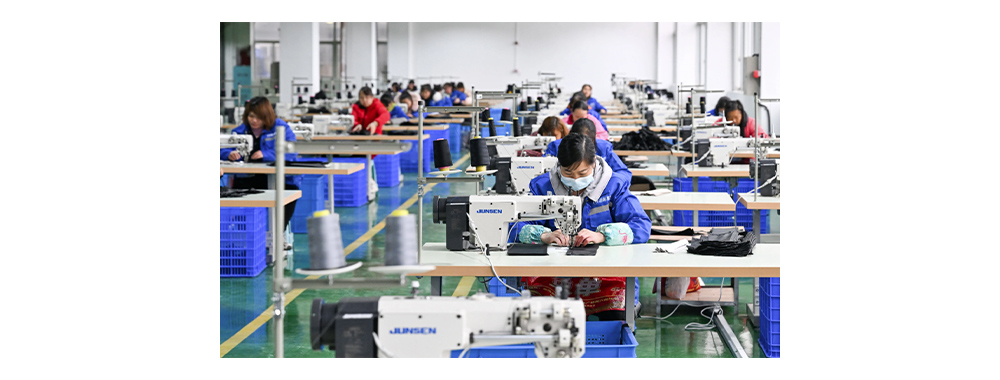
Many factories explain that handmade samples are completed independently by sampling room masters with superior craftsmanship, while bulk production is assembly-line work with dedicated personnel for each process, resulting in quality differences. However, based on our 30+ years of production experience, if a factory has clear quality standard guidelines and consistently enforces them over the long term, there should be no visible difference between samples and bulk goods.

 Bag Customization

Conclusion: Choose a Professional Bag Manufacturer and Make Sampling a Preview of Bulk Quality

Sampling is not simply "making a sample." It is the core stage of the entire OEM/ODM customization process for validating design feasibility and aligning quality standards between both parties. An experienced bag factory can anticipate bulk production risks during the sampling phase, helping clients reduce costs and enhance product competitiveness through process optimization recommendations.

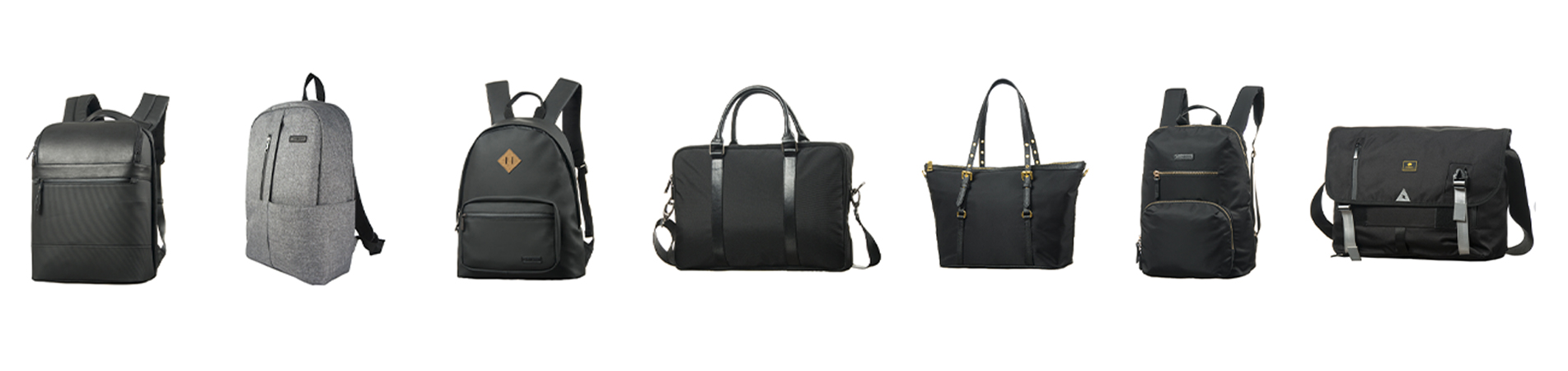
If you are looking for a reliable bag customization partner, welcome to contact our business team for detailed sampling plans and quotations. Whether it is Nylon Backpack OEM, Premium Leather Handbag OEM, or Elegant Cosmetic Pouch Manufacturing, we can provide worry-free OEM services that meet your expectations.

  Author  


문의하기
주소 : Unit 905, Block B, Jinri Building, No. 88 Anling Second Road, Huli District, Xiamen, Fujian, China
연락하기

계속 읽어보시고, 계속해서 소식을 받아보시고, 구독하세요. 귀하의 생각을 알려주시면 감사하겠습니다.

Linkedin WhatsApp Facebook instagram

저작권 @2024 Synberry Bag & Package Products Co.,Ltd 모든 권리 보유 . 네트워크 지원

사이트맵 / 블로그 / Xml / 개인 정보 보호 정책

메시지를 남겨주세요

메시지를 남겨주세요
우리의 전문 지식이 어떻게 최고 품질의 매력적인 제품을 제공할 수 있는지 논의하게 되어 기쁩니다. 여기에서 대화를 시작하세요. 연결하고 창조해 봅시다!
제출하다

제품

왓츠앱

문의하기