
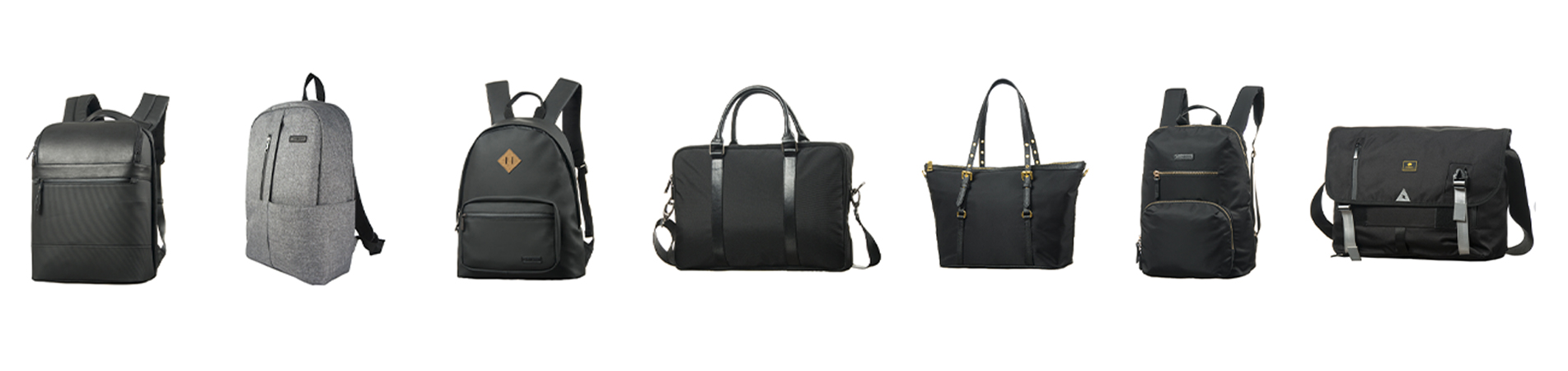
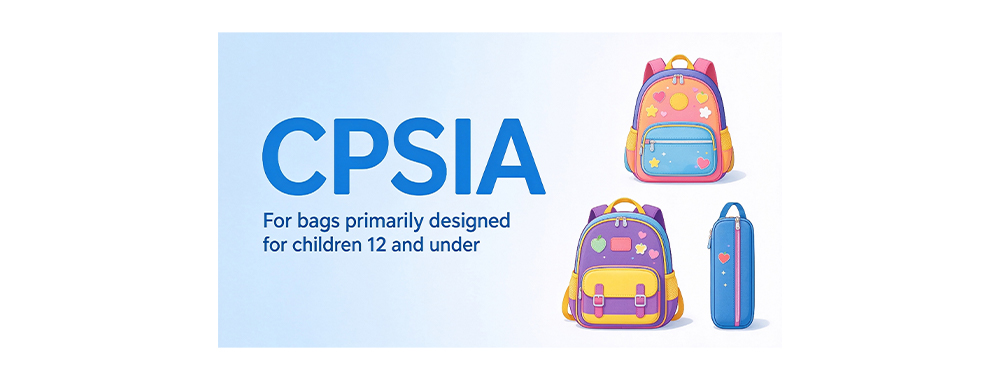
CPSIA, short for the Consumer Product Safety Improvement Act, is a consumer product safety law enacted by the U.S. Congress in 2008 and enforced by the U.S. Consumer Product Safety Commission (CPSC). Its core regulatory scope covers products primarily designed for or intended to be used by children 12 years of age or younger.
For children's bag manufacturers and exporters, the CPSIA establishes strict mandatory standards. The key requirements include restrictions on lead content, a prohibition on the use of certain phthalates, and ensuring that products comply with applicable physical and mechanical performance testing requirements. Any bag product sold in the U.S. market that is primarily intended for use by children 12 years of age or younger must undergo testing and certification by a third-party laboratory and be accompanied by a Children's Product Certificate (CPC) to ensure compliance.

Table of Contents
CPSIA applies to all bags that are “primarily designed for children 12 years of age or younger,” such as children's backpacks, school bags, lunch bags, pencil cases, and other similar products. The specific core testing requirements are as follows:
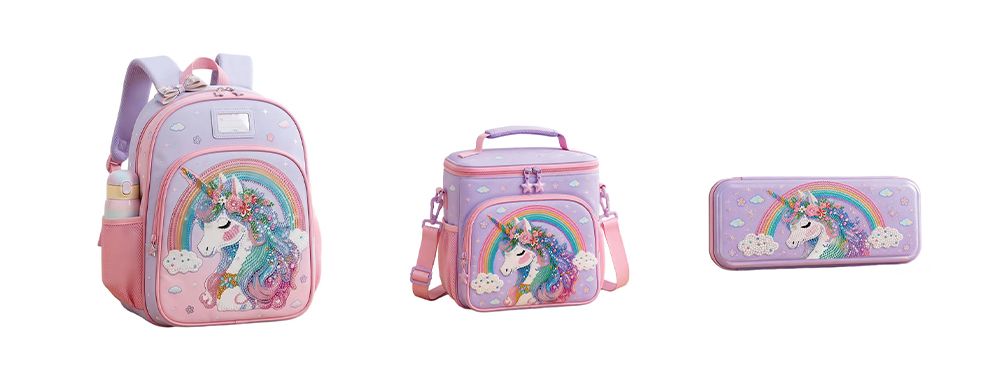
For textiles and hardware products, the truly important measurable limits are lead and phthalates. Lead is regulated in two ways: first, the total content in the substrate; and second, the lead content in any surface coating or paint. The eight restricted phthalates apply to plasticized components, such as PVC zipper pulls, printed labels, and soft rubber trim.
1.1 1 Lead Content (Section 101)
|
Test Item |
Limit |
|
Coatings/Paint (surface coating) |
≤ 90 ppm |
|
Substrate (fabrics, plastics, metal zippers, buttons, webbing, prints, and all other accessible components) |
≤ 100 ppm |
These limits apply to all accessible components of bags, including outer fabric, lining, zipper pulls, fasteners, decorative elements, sewing thread, and printing inks. If the product contains electronic components or certain special metal alloys, special attention must be paid to whether their lead content complies with the standard.
It is worth noting that the CPSIA has a clear definition of “accessibility”:
If a component is completely covered by a layer of protective material, and the protective layer does not become damaged or detached after undergoing the reasonable use and abuse tests specified by the CPSC, such as tension, torque, drop, and other tests, the internal component may be exempt from lead content testing.
Conversely, if the protective layer fails and causes the internal material to become exposed, it must meet the requirement of ≤ 100 ppm (that is, the content of the substance must not exceed 1 gram per kilogram of material). In addition, for internal components that cannot avoid contact through physical isolation, strict compliance is required regardless of whether they are easily accessible to children.
1.1.2 Phthalates (Section 108)
The 8 restricted phthalates (DEHP, DBP, BBP, DINP, DIBP, DPENP, DHEXP, DCHP) are each limited to ≤ 0.1% (1000 ppm), meaning that the content of each substance must not exceed 1 gram per kilogram of material.
Not all children's bag components are subject to this restriction. Section 108 primarily regulates children's toys that can be “put into the mouth” and certain child care articles. For ordinary children's bags, such as school bags and backpacks, phthalate testing is generally not mandatory if their intended use does not include chewing or sucking by children.
However, if a bag contains soft plastic components, such as transparent windows made of PVC, soft rubber handles, decorative soft plastic pendants, etc., and these components may be placed in the mouths of children under 3 years of age, they must comply with the requirements. In addition, the CPSC in recent years.
Textile fabrics must comply with the requirements of 16 CFR 1610 (flammability of clothing textiles), Class 1 or Class 2. Most backpack fabrics generally fall into exempt categories, but the specific determination must be made based on the fabric composition.
This is the stage where problems are most likely to occur. The compliance costs of an “adult bag” and a “children's bag” can differ significantly.
Key Risk Materials Compliant Alternatives
PVC-coated fabric Eco-friendly PU coating
Soft rubber raised-print designs Silicone printing (food-grade), embroidery
Metal zippers/snap buttons without test reports Hardware from well-known brands (YKK, SBS, etc.)
Unknown-source inks/dyes Require suppliers to provide SDS or test reports
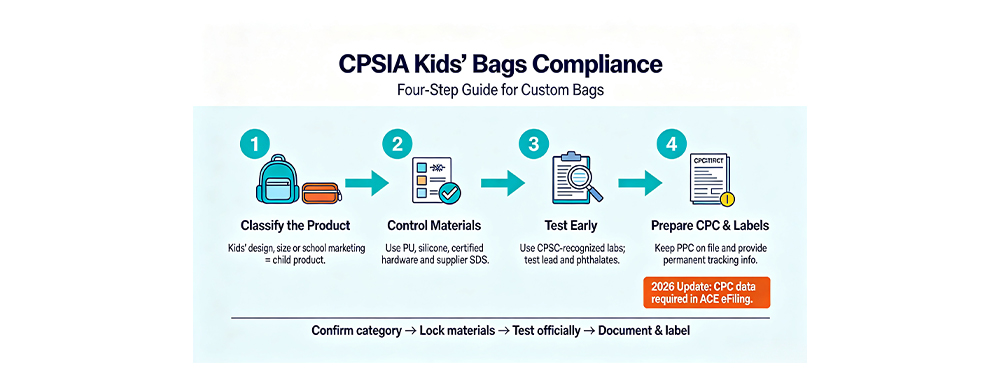
SYNBERRY BAG adopts a four-stage quality control system—IQC (Incoming Quality Control), IPQC (In-Process Quality Control), FQC (Final Quality Control), and OQC (Outgoing Quality Control)—to move compliance checkpoints forward into the production process, ensuring that non-compliant materials are identified before they are sewn into thousands of finished products.
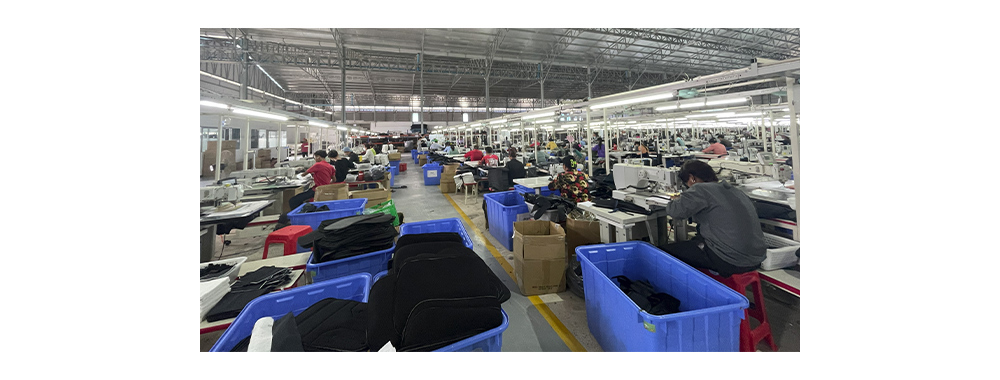
Throughout the entire bag production process, SYNBERRY BAG consistently follows the AQL 1.5/4.0 sampling standard under ISO 2859, ensuring consistency and stable compliance across mass-produced products.
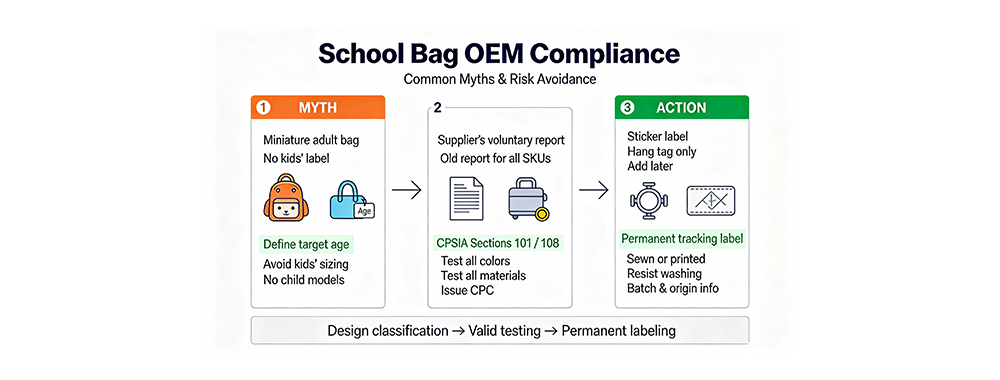
During the actual school bag OEM production process, many brand owners have misunderstandings about CPSIA compliance and often encounter a series of problems due to overlooking important details. Below are several common misconceptions and practical response recommendations from a school bag manufacturer:
Many companies believe that as long as the packaging does not state “for children only,” the product can be exported as an adult product. However, the CPSC applies a “primary use” determination principle. If the product's size is clearly suitable for children under 12 years of age, such as mini backpacks or cartoon-style crossbody bags, or if children are shown using the product in marketing images, the product may still be classified as a children's product even without an explicit statement.
Response Strategy: Clearly define the target audience during the product design stage. If the product is indeed intended for adults, avoid using juvenile cartoon imagery, bright color combinations, and children's size specifications. Marketing materials should also strictly avoid using child models or suggestive wording that implies the product is intended for children.
Some suppliers provide a voluntary test report (Test Report) rather than compliance documentation based on the mandatory requirements of the CPSIA. Although well-known laboratories may have CPSC-recognized accreditation, if the report does not explicitly reference the relevant CPSIA sections, such as Section 101 and Section 108, or does not cover all accessible components, the report cannot serve as a valid basis for issuing a CPC certificate. In addition, products from different batches and products with different fabric colors need to be tested separately; an old report cannot simply be reused.
Response Strategy: When commissioning testing, explicitly require a test report that complies with CPSIA standards, and ensure that the test samples cover all color and material variations. After receiving the report, carefully verify the test standard numbers and applicable limits, and then prepare the CPC certificate accordingly.
A permanent tracking label (Tracking Label) is a mandatory CPSIA requirement. It must be directly printed or sewn onto the product, and the information must be clear, legible, and resistant to washing and abrasion. The CPSC explicitly requires tracking labels to be “permanent,” meaning that they cannot be removed without damaging the product and must withstand normal use and washing without becoming illegible or falling off. Simple stickers, hangtags, or easily erasable printing do not meet the requirements.
Response Strategy: Integrate the tracking information into the care label, interior lining print, or molded/embossed marking at the early stage of bag production. Ensure that the label is positioned discreetly but remains easy to locate, that the text is clear and legible, and that abrasion-resistant and wash-resistant materials and processes are used.
A: The key factor is the determination of the product's “primary use.” The CPSC will comprehensively consider the product's design, packaging, marketing and promotional materials, and consumer perception. If the product is clearly geared toward children under 12 in terms of size, patterns (such as cartoon characters), or functional design, or if children are shown in e-commerce listings or advertisements or the marketing materials imply scenarios involving children's use, the product is very likely to be classified as a children's product even if it is not explicitly labeled “for children only,” and will therefore be required to comply with CPSIA. If the target group is indeed adults, the product design and marketing should be strictly de-child-oriented to avoid misclassification.
A: Yes. CPSIA compliance follows the “one product, one test” principle, but more accurately, it is “one material formulation, one test.” If bags in different colors use fabrics and accessories from the same batch and with the same formulation (with only the color masterbatch being different), and the supplier can provide evidence proving that the pigment composition is consistent, some laboratories may allow combined testing or differentiated assessment. However, to minimize risks, especially when colors involve different suppliers or different materials (such as glossy versus matte finishes), it is recommended to sample and test each significantly different color/material combination separately to ensure that all variants comply with the limits for lead and phthalates.
A: The CPC certificate must be issued by the U.S. importer or the domestic manufacturer, but its contents must be based on qualified test results issued by a CPSC-accepted third-party laboratory. A manufacturer cannot issue a CPC solely on the basis of its internal quality inspection reports. The certificate must include product information, a list of applicable safety regulations, a summary of test results, testing laboratory information, and the contact information of the person issuing the certificate. Although the certificate is signed by the brand owner or importer, its legal validity depends entirely on the supporting third-party test data.
A: Yes. CPSIA requires testing of all “accessible components.” If an accessory is sold as part of the bag and may detach after normal use or abuse testing and become accessible to a child, both the accessory itself and its attachment components must comply with the limits for lead and phthalates. If the accessory is determined to have an independent toy function, it may also be subject to more stringent ASTM F963 toy standard testing. It is recommended to treat the accessory as an integral part of the bag during the design and testing stages for comprehensive evaluation, or separately confirm its compliance.
A: Testing costs are not fixed and depend on the complexity of the product, the number and types of materials involved, and the fee structure of the selected laboratory. Generally speaking, basic chemical testing (lead and phthalates) costs anywhere from several hundred to several thousand U.S. dollars. If the bag has a complex structure and contains multiple types of hardware, printed materials, or soft plastic/rubber components, separate sampling and testing may be required, resulting in higher costs.
Regarding the testing timeline, routine testing usually takes 5–7 business days. During peak seasons or when complex wet-chemical confirmation testing is required, the process may be extended to 10–15 business days. Therefore, sufficient testing time must be reserved at the beginning of the project to avoid shipment delays caused by waiting for test reports. Expedited services are usually available, but they will incur additional fees.
CPSIA compliance is not only a legal threshold for entering the U.S. market, but also a core competitive advantage for brands seeking to build consumer trust and mitigate recall risks. For children's bag manufacturers and exporters, compliance should not be regarded as a temporary remedial measure before shipment; instead, it should run throughout the entire product lifecycle, including product design, material selection, production, and certification.
Controlling material safety at the source, clearly defining product positioning during the design stage, implementing permanent tracking labels during production, and completing rigorous third-party testing and CPC certification before customs clearance are key steps to ensuring a smooth supply chain. With the full implementation of the eFiling electronic filing system in 2026, requirements for data transparency and compliance traceability will become even stricter. Only by integrating compliance awareness into daily operations can companies navigate intense international competition steadily and achieve sustainable business growth.
Synberry Bag has been specializing in various bag OEM/ODM services for more than 30 years. We are familiar with international standards and regulations such as CPSIA and have established mature compliance management systems and supply chain management capabilities. We are committed to providing global customers with one-stop solutions covering everything from design and development to production and manufacturing.
| Author | ||||||
|
계속 읽어보시고, 계속해서 소식을 받아보시고, 구독하세요. 귀하의 생각을 알려주시면 감사하겠습니다.




저작권
@2024 Synberry Bag & Package Products Co.,Ltd 모든 권리 보유
.
 네트워크 지원
사이트맵 / 블로그 / Xml / 개인 정보 보호 정책